House Siding Cost in Indianapolis, IN (2026)
House siding cost in Indianapolis comes down to a few measurable things: how much wall area your home has, which material you choose, what has to come off the walls first, and how much trim, wrap, and detail work goes around it. This guide explains how siding prices are built in 2026, how to estimate the size of your own project, and where the money goes, so you can read a siding estimate with confidence.
We are Nora Siding Company, and we install, replace, repair, and inspect siding across Indianapolis and nearby communities such as Carmel, Fishers, Greenwood, Westfield, Brownsburg, Plainfield, and Zionsville. We do not publish a price list. Every home is different, so we give a written quote after a free inspection. This guide shows you what goes into that quote.
Last updated: January 2026
How much does house siding cost in Indianapolis in 2026?
House siding cost in Indianapolis depends on your home's wall area, the material, and how much prep and trim work the job needs, so the only reliable number is a written quote based on your actual house. National cost guides show a very wide spread for the average cost to reside a house. A small single-story home in budget vinyl sits at the low end. A large, multi-story home in premium fiber cement with full tear-off and new trim sits at the high end, often several times higher. Most homeowners land somewhere in the middle. Treat any published national range as a rough benchmark only, because it does not reflect your walls, your material, or Indianapolis labor conditions.
The cost of siding and installation has three parts:
Read moreShow less
- Materials: the siding panels plus starter strips, J-channel, corner posts, trim, house wrap, fasteners, and any insulation board.
- Labor: tear-off, wall prep, installation, and detail work around windows, doors, and rooflines.
- Project costs: permits where required, dumpster and disposal, and repairs to rotted sheathing found once the old siding is off.
Because the material and labor are both priced against the size of the walls, the first number to understand is the cost per unit of area.
How much does siding cost per square foot?
Siding cost per square foot changes with the material and the complexity of the walls, and contractors usually quote it per "square," which equals 100 square feet of wall coverage. A siding cost per square already bundles the panels with the labor to hang them. Trim, tear-off, and wall repairs are usually listed as separate lines. When you compare two quotes, check whether each one lists the same items in the per-square price.
Tip: how to estimate your siding squares
- Measure the length of each exterior wall and multiply by its height (eave to foundation). Add the walls together.
- For each gable end, multiply the base width by the peak height and divide by 2. Add that to your total.
- Subtract large openings such as garage doors and big picture windows. Leave standard windows in. The cutting and trim around them adds labor and offcuts.
- Divide the total by 100 to get squares.
- Add about 10 percent for waste, plus a little more if the house has many corners, dormers, or angles.
Read moreShow less
A house with 1,800 square feet of net wall area is about 18 squares before waste and roughly 20 squares after. That wall-area figure is very different from your home's living area, which is why houses with the same listed size can need very different amounts of siding.
Free, no-obligation estimates
Talk to Nora Siding Company
Tell us what you need and we’ll take it from there.
At a glance
How much does it cost to side a 1200 or 1500 sq ft house?
The cost to put siding on a 1,200 or 1,500 square foot house depends more on the shape and height of the walls than on the floor area, so two homes of the same size can be priced quite differently. Take a 1,200 square foot ranch that measures about 30 by 40 feet. It has around 140 feet of perimeter, and at standard single-story wall height that comes to roughly 1,200 to 1,300 square feet of wall before gables. Now take a 1,500 square foot two-story home with a 25 by 30 foot footprint. It has only 110 feet of perimeter, but the taller walls give it nearly 2,000 square feet of siding area.
| Home size (living area) | Typical layouts in the Indianapolis area | What moves the price most |
|---|---|---|
| 1,200 sq ft | Single-story ranch, small Cape Cod, older bungalow | Gable size, tear-off of original siding, sheathing condition on older homes |
| 1,500 sq ft | Ranch with attached garage, compact two-story, split-level | Number of stories, garage walls, porch and soffit work |
| 2,000 sq ft | Two-story suburban home, larger ranch, tri-level | Wall height and access, rooflines and bump-outs, amount of trim |
As homes get larger, these differences grow, which is why the 2,000 square foot question deserves its own answer.
How much does 2000 square feet of siding cost?
Siding cost for 2,000 square feet of wall area, about 20 squares plus waste, depends mostly on the material grade and the labor needed to cover those walls safely. If "2,000 square feet" means a home's living area instead, the true wall area may be quite a bit higher on a two-story house, so measure the walls first using the method above. At this size, a few choices have a large effect on the final quote:
- Stories: second-story walls need staging or lifts and take longer to work.
- Architectural detail: dormers, bay windows, and multiple gables add cuts, flashing, and trim.
- Material: on 20 or more squares, the gap between budget and premium siding is multiplied across every square.
Material is often the single biggest lever, so the next step is to compare how the options rank.
At a glance
What siding materials cost the most and least?
Vinyl and aluminum are usually the least expensive siding materials, and natural wood and fiber cement are at the higher end, with engineered wood in between. The table below ranks the common options by relative installed cost, based on national pricing patterns. Your actual price comes from a written quote.
| Material (2026) | Relative installed cost | Upkeep | Notes |
|---|---|---|---|
| Vinyl | Lowest to moderate (wide range by grade and thickness) | Low: occasional washing | The most popular budget-friendly choice. Insulated and premium profiles cost more. |
| Metal / aluminum | Low to moderate | Low: can dent, may need repainting over time | Durable against moisture. Less common on newer Indianapolis homes. |
| Engineered wood (such as LP SmartSide) | Moderate | Moderate: periodic repainting | The look of wood with treated, manufactured boards. |
| Fiber cement / James Hardie | Moderate to high | Low to moderate: paint lasts many years | Fire and pest resistant. Commonly cited lifespan of 30 to 50 years. |
| Natural wood / cedar | Moderate to high | High: regular painting or staining | Classic look. Needs the most maintenance in Indiana's freeze-thaw cycles. |
For a deeper breakdown by material, see our pages on vinyl siding cost in Indianapolis and fiber cement and Hardie siding cost, or read about wood siding installation. If your top priority is keeping the bill low, the next question is how to get there.
What is the cheapest way to side my house?
The cheapest way to side most houses is standard vinyl siding, installed over the existing siding when that siding is flat, dry, and firmly attached. Installing over sound siding avoids tear-off labor and disposal. It is not always allowed, though. Local code, the condition of the old siding, and the manufacturer's installation requirements all have to permit it, and covering rot or moisture problems only hides damage that will cost more later.
Other ways to keep a project affordable without cutting corners:
- Choose a standard vinyl profile and color instead of premium or specialty panels.
- Keep the existing trim, soffit, and fascia if they are in good shape.
- Use accent materials such as shakes or board and batten only on gables instead of whole walls.
- Replace only the worst elevations if the other sides are sound and can be matched.
Cheap siding and affordable siding are not the same thing. Thin panels can wave, crack, or blow off sooner. Panel width affects both price and appearance, which leads to a common question about exposure size.
Is 4 inch or 5 inch siding better?
Neither 4 inch nor 5 inch siding is better in every case. Five inch exposure (often sold as double 5) is the more common modern choice and usually needs fewer pieces and less labor, while 4 inch (double 4) gives a narrower, more traditional line that suits older homes. The number refers to how much of each lap shows on the wall.
- Choose 4 inch to match original clapboard on older Indianapolis neighborhoods, on smaller homes where narrow lines look in proportion, or when replacing part of a wall that already uses 4 inch.
- Choose 5 inch for most suburban homes, larger wall areas, and projects where you want fewer seams and a slightly lower labor cost.
Exposure is only one of several factors that shape a quote, and the full list is below.
At a glance
What factors change the price of siding?
The price of siding changes with home size and height, material, tear-off and disposal, the condition of the walls, trim work, underlayment, permits, and access. This table shows how each factor works.
| Cost factor | Why it changes the price |
|---|---|
| Wall area (squares) | More squares mean more material and labor. This is the base of every estimate. |
| Number of stories and wall height | Taller walls need ladders, staging, or lifts and take more time. |
| Material and grade | Vinyl, engineered wood, fiber cement, and wood differ in panel cost and installation time. |
| Tear-off and disposal | Removing old siding adds labor, dumpster, and dump fees. Multiple old layers add more. |
| Damage found underneath | Rotted sheathing or framing must be repaired before new siding goes on. |
| Trim, soffit, and fascia | Wrapping or replacing trim adds material and detailed labor. |
| House wrap and insulation | A new weather barrier or rigid foam board adds cost and improves performance. |
| Rooflines and wall complexity | Gables, dormers, and many corners mean more cuts, flashing, and waste. |
| Access | Tight lot lines, landscaping, and decks slow the work. |
| Permits and local labor rates | Requirements vary by municipality around Indianapolis. |
A material choice that raises several of these factors at once is board and batten, so it is worth looking at separately.
How much does board and batten siding cost?
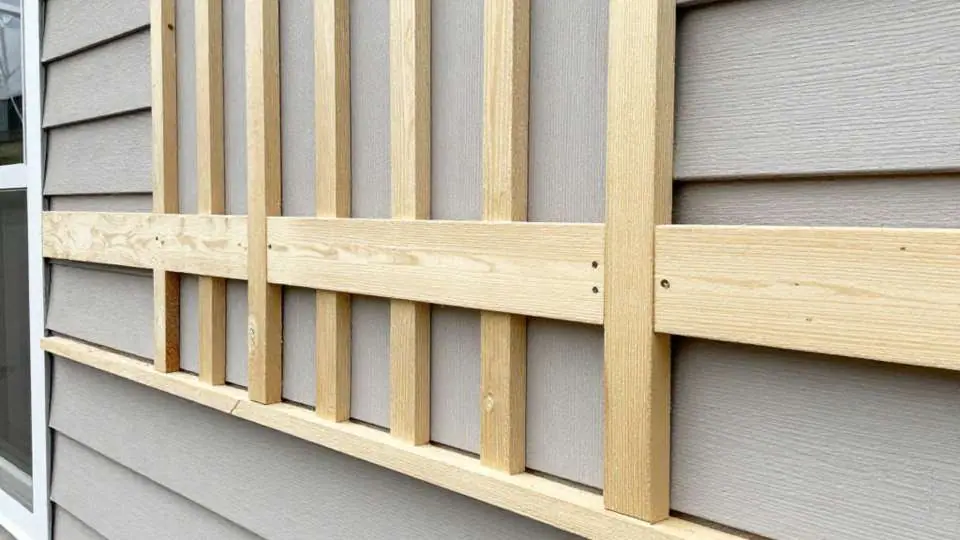
Board and batten siding cost usually runs higher than standard lap siding of the same material, because each wall gets two layers of components (wide boards plus narrow battens) that have to be laid out, spaced, and fastened by hand.
Board and batten cost drivers
- Material: vinyl board and batten panels cost less than fiber cement or engineered wood boards with separate battens.
- Batten spacing: tighter spacing means more battens and more labor.
- Full house or accent: using it only on gables or an entry bump-out keeps costs closer to lap siding.
- Painting: fiber cement and wood versions may need field painting or touch-up after installation.
Learn more about our board and batten siding installation. Not every project calls for new siding, though. Sometimes a repair is all you need.
How much does siding repair cost?
Siding repair cost depends on how many panels are damaged, whether matching material is available, and whether water has reached the sheathing behind the siding.
Repair cost drivers
- Extent of damage: a few cracked vinyl panels from hail or a mower strike cost far less than a rotted wall section.
- Color and profile matching: discontinued or faded siding may require pulling panels from a hidden wall or re-siding a full elevation.
- Hidden moisture: soft sheathing, failed flashing, or mold found under the panels adds repair work.
- Urgency: storm damage that leaves walls open needs fast action. We offer 24/7 emergency service.
See our siding repair page for details. When repairs start to add up, the bigger question is whether full replacement makes more sense.
Is it worth replacing siding on a house?
Replacing siding is worth it when the existing siding is failing, letting in moisture, or costing more in repeated repairs than it would to replace. It also makes sense when you plan to sell and the exterior is hurting curb appeal. Signs that point toward replacement include:
- Warped, buckled, or loose panels on several walls
- Soft spots, rot, or peeling paint inside the home on exterior walls
- Widespread cracking, fading, or hail damage
- Siding that needs frequent painting you no longer want to keep up with
- Higher energy bills from drafty walls with no house wrap or insulation
New siding also gives you a chance to add house wrap and insulation and to fix flashing around windows. Read more on siding replacement cost and our siding replacement service. Once replacement makes sense, the next question for many homeowners is how to pay for it.
Can I finance a siding project?
Yes. Nora Siding Company offers financing for siding projects, so you can spread the new siding cost over time instead of paying it all at once.
Financing callout: Ask about financing when you schedule your free inspection. We will go over the available options with your written quote, so you can compare the full project cost and a payment plan side by side. If storm damage is involved, we can also help you through the insurance claim process.
Whether you finance or pay outright, an accurate number starts with a proper estimate.
How do I get an accurate siding estimate?
You get an accurate siding estimate from an on-site inspection that measures your walls, checks what is under the existing siding, and lists every line item in writing. Phone quotes and online calculators cannot see rot, multiple old layers, or trim condition. Here is how our process works:
- Free inspection: we measure each elevation, count squares, and note openings, gables, and trim.
- Condition check: we look for loose panels, moisture, soft sheathing, and flashing problems.
- Material discussion: we review vinyl, fiber cement, James Hardie, and board and batten options against your budget and goals.
- Written quote: you get itemized materials, labor, tear-off, trim, and any repair allowances.
When comparing quotes, confirm that each one covers the same squares, the same material grade, tear-off, house wrap, and trim. Browse Nora's siding services, or use the free estimate form on this page or our contact page. You can also call (317) 331-8762.
FAQ
Frequently asked questions
Does siding cost more for two-story homes?
Usually, yes. Two-story homes have more wall area for the same footprint, and the upper walls need ladders, staging, or lifts, which adds labor time.
Does insulated siding cost more?
Yes. Insulated vinyl, or siding installed over rigid foam board, costs more than standard panels. It can improve wall stiffness and comfort, and we include it as a separate line in your quote so you can compare.
Do you offer financing?
Yes. We offer financing on siding projects. Ask about the options during your free inspection.
Are estimates free?
Yes. Inspections and estimates are free, and you receive a written quote after we look at your home.
Does removal of old siding cost extra?
Tear-off and disposal are typically separate line items, because they add labor and dumpster fees. In some cases new vinyl can go over sound existing siding, which avoids that cost. We will tell you whether that is a good option for your walls.
Does insurance ever pay for siding?
Homeowners insurance may cover siding damaged by sudden events such as hail or wind, depending on your policy. It generally does not cover wear and age. We help homeowners with insurance claims, including documenting the damage.
Ready for a real number for your home? Call Nora Siding Company at (317) 331-8762 for a free inspection, or fill out the free estimate form on this page.
Why choose us
Why choose Nora Siding Company?
Free estimates
Get a clear, no-obligation estimate before any work begins.
Licensed & insured
Your property and our crew are protected on every project.
Residential & commercial
One team for homes, multi-family and commercial properties.
Locally owned & operated
A local team serving your community and the surrounding area.
Get in touch
Find siding help near you
Request a free estimate online or give us a call — our team will follow up quickly.
- Call us(317) 331-8762
- Visit450 E 96th St 500 7, Indianapolis, IN 46240
- HoursMon-Sun: 7 AM - 7 PM